The Lake Erie Inquiry
Election ’26Elecciones ’26
3days to Nov. 3días al 3 de nov.FederalFederal
U.S. SenateSenado de EE. UU.
Husted, Brown, Redpath and Levy vie for Ohio’s Senate seatCuatro candidatos se disputan el escaño de Ohio en el Senado
On your ballotEn su boleta
U.S. Senator, unexpired term ending Jan. 3, 2029
In the order the Wood County Board of Elections lists them; the order on your ballot may differ.En el orden en que los lista la Junta Electoral del Condado de Wood; el orden en su boleta puede ser otro.
Four candidates are on the ballot, according to the Wood County Board of Elections’ certified candidate list: Democrat Sherrod Brown, Republican Jon Husted, Libertarian William B. Redpath and Greg Levy, listed as an other-party candidate. The winner serves until Jan. 3, 2029. Gov. Mike DeWine appointed Husted, then lieutenant governor, to the seat in January 2025, after Vance resigned to become vice president. Brown held Ohio’s other Senate seat from 2007 until he lost it to Republican Bernie Moreno in 2024.Hay cuatro candidatos en la boleta, según la lista certificada de candidatos de la Junta Electoral del Condado de Wood: el demócrata Sherrod Brown, el republicano Jon Husted, el libertario William B. Redpath y Greg Levy, que figura como candidato de otro partido. El ganador servirá hasta el 3 de enero de 2029. El gobernador Mike DeWine nombró a Husted, entonces vicegobernador, para el cargo en enero de 2025, después de que Vance renunció para ser vicepresidente. Brown ocupó el otro escaño de Ohio en el Senado desde 2007 hasta que lo perdió ante el republicano Bernie Moreno en 2024.
Their answers appear here as they gave them, with some light editing.Sus respuestas aparecen aquí tal como las dieron, con una ligera edición.
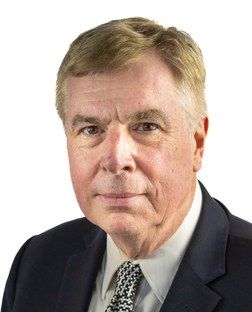
William B. RedpathLibertarianLibertario
The Senate passed S. 528 on Sept. 29; the House has not acted and the bill is not law, so the initiative’s authorization under 33 U.S.C. 1268 ran out with fiscal year 2026 on Sept. 30.El Senado aprobó la S. 528 el 29 de septiembre; la Cámara de Representantes no ha actuado y el proyecto no es ley, así que la autorización de la iniciativa bajo 33 U.S.C. 1268 venció con el año fiscal 2026 el 30 de septiembre.
1. Should the federal government regulate farm-nutrient runoff into Lake Erie’s western basin, where the algal blooms form, or should controls stay voluntary?1. ¿Debería el gobierno federal regular la escorrentía de nutrientes agrícolas hacia la cuenca occidental del lago Erie, donde se forman las floraciones de algas, o los controles deberían seguir siendo voluntarios?
I think it would be better to retain voluntary and incentives based management of farm nutrient runoff.Creo que sería mejor mantener un manejo voluntario y basado en incentivos de la escorrentía de nutrientes agrícolas.
2. What federal role, if any, should there be in where data centers are built and in who pays for the power lines and plants they need?2. ¿Qué papel debería tener el gobierno federal, si alguno, en dónde se construyen los centros de datos y en quién paga las líneas eléctricas y las plantas que necesitan?
I don’t think there should be a Federal government role in the matter of data center locations.No creo que el gobierno federal deba tener un papel en la ubicación de los centros de datos.
3. The Red Light Act, introduced Sept. 16 by Sens. Husted and Moreno, would withhold part of a state’s federal highway money if the state allows automated traffic cameras. Would you vote for it, and what would it mean for Toledo and for Ohio’s highway money?3. La Red Light Act, presentada el 16 de septiembre por los senadores Husted y Moreno, retendría parte de los fondos federales de carreteras de un estado si este permite cámaras de tránsito automáticas. ¿Votaría a favor, y qué significaría para Toledo y para los fondos de carreteras de Ohio?
Correction: this question described the bill wrongly. S. 5413 would withhold a state’s share of three federal highway programs if the state lets people who are in the country illegally get a driver’s license or state ID. It does not deal with traffic cameras.Corrección: esta pregunta describía mal el proyecto. S. 5413 retendría la parte que le corresponde a un estado de tres programas federales de carreteras si el estado permite que personas que están en el país ilegalmente obtengan licencia de conducir o identificación estatal. No trata de cámaras de tránsito.
My understanding of The Red Light Act is that it mandates that states not issue driver’s licenses to undocumented immigrants or lose some or all of its Federal highway grants. I don’t think the Federal government should be giving money to the states for highways in the first place. This is part of Trump’s cruel and counterproductive war on immigrants, so I would vote “No” on this bill.Entiendo que la Red Light Act exige que los estados no emitan licencias de conducir a inmigrantes indocumentados o pierdan parte o la totalidad de sus subvenciones federales para carreteras. Para empezar, no creo que el gobierno federal deba darles dinero a los estados para carreteras. Esto es parte de la cruel y contraproducente guerra de Trump contra los inmigrantes, así que votaría “No” a este proyecto.
4. When did you make Ohio your home again, and where did you live before you did?4. ¿Cuándo volvió a hacer de Ohio su hogar, y dónde vivía antes?
I moved back to Ohio in April 2025. I was born and raised in Findlay, Ohio. I previously lived in West Dundee, Illinois, a far northwest suburb of Chicago, although I lived most of my adult life in Northern Virginia.Regresé a Ohio en abril de 2025. Nací y crecí en Findlay, Ohio. Antes viví en West Dundee, Illinois, un suburbio lejano al noroeste de Chicago, aunque pasé la mayor parte de mi vida adulta en el norte de Virginia.
5. Name one federal program that reaches Lucas or Wood counties you would cut, and one you would keep.5. Nombre un programa federal que llegue a los condados de Lucas o Wood que usted recortaría, y uno que mantendría.
I would eliminate all corporate welfare and farm subsidies. I would retain the Social Security program and ideally allow private accounts for the employee portion of Social Security contributions. But, that might increase the Federal deficit too much. If that can’t be done, Social Security should have a maximum benefit amount (some wealthy seniors are getting large monthly payments they don’t need), an increase in the retirement age to 70, and Cost of Living Adjustments in line with price increases, not wage increases. Those things are necessary to bring Social Security into long run fiscal balance.Eliminaría todos los subsidios corporativos y agrícolas. Mantendría el Seguro Social e idealmente permitiría cuentas privadas para la parte de las contribuciones al Seguro Social que paga el empleado. Pero eso podría aumentar demasiado el déficit federal. Si no se puede hacer, el Seguro Social debería tener un beneficio máximo (algunos jubilados adinerados reciben pagos mensuales grandes que no necesitan), subir la edad de jubilación a 70 años y ajustes por costo de vida en línea con los aumentos de precios, no de salarios. Esas cosas son necesarias para lograr el equilibrio fiscal del Seguro Social a largo plazo.
Brown, Husted and Levy each received the same four questions, and two of their own, on Sept. 29 and did not answer them by the Oct. 26 deadline. In lieu of their answers, The Lake Erie Inquiry offers a biography of each, drawn from public records.Brown, Husted y Levy recibieron cada uno las mismas cuatro preguntas, y dos propias, el 29 de septiembre y no las respondieron antes del plazo del 26 de octubre. En lugar de sus respuestas, El Faro del Erie ofrece una biografía de cada uno, basada en registros públicos.
Sherrod BrownDemocraticDemócrata
Brown served in the U.S. House from 1993 to 2007 and in the Senate from 2007 to 2025, congressional records show. He chaired the Senate Banking Committee from 2021 to 2025. His Butch Lewis Act, folded into the 2021 COVID-19 relief law, rescued failing union pension plans without cutting retirees’ earned benefits. He lost the seat in 2024 to Moreno by about 206,000 votes. He was born and raised in Mansfield and lives in Columbus with his wife, the columnist Connie Schultz, his campaign website says. The site says, “When you love your country, you fight for the people who make it work.”Brown sirvió en la Cámara de Representantes de EE. UU. de 1993 a 2007 y en el Senado de 2007 a 2025, según los registros del Congreso. Presidió el Comité Bancario del Senado de 2021 a 2025. Su Ley Butch Lewis, incluida en la ley de alivio por el COVID-19 de 2021, rescató planes de pensiones sindicales en quiebra sin recortar los beneficios ganados por los jubilados. Perdió el escaño en 2024 ante Moreno por unos 206,000 votos. Nació y creció en Mansfield y vive en Columbus con su esposa, la columnista Connie Schultz, según su sitio de campaña. El sitio dice: “When you love your country, you fight for the people who make it work” (“Cuando uno ama a su país, lucha por la gente que lo hace funcionar”).
Jon HustedRepublican · incumbentRepublicano · titular
Husted was raised in Williams County, graduated from Montpelier High School and earned bachelor’s and master’s degrees from the University of Dayton, his Senate biography says. It says he was elected to the Ohio House in 2000, served as speaker from 2005 to 2009, served in the Ohio Senate, won two terms as secretary of state starting in 2011, was then elected lieutenant governor and began serving in the U.S. Senate in January 2025. His campaign website carries the slogan “Working for Us. Delivering for Ohio.”Husted creció en el condado de Williams, se graduó de Montpelier High School y obtuvo una licenciatura y una maestría en la Universidad de Dayton, según su biografía del Senado. Esta dice que fue elegido a la Cámara de Representantes de Ohio en 2000, fue su presidente de 2005 a 2009, sirvió en el Senado de Ohio, ganó dos periodos como secretario de Estado a partir de 2011, luego fue elegido vicegobernador y empezó a servir en el Senado de EE. UU. en enero de 2025. Su sitio de campaña lleva el lema “Working for Us. Delivering for Ohio.” (“Trabajando para nosotros. Cumpliendo para Ohio”).
Greg LevyOther partyOtro partido
The Federal Election Commission lists his campaign, under the name Gregory Lee Levy, as independent. His campaign website describes him as a veteran and a socialist and has a page about the Party for Socialism and Liberation. He has not held elected office that this paper could find. The site says, “We are building a socialist movement to end the rule of the billionaires once and for all.”La Comisión Federal Electoral registra su campaña, bajo el nombre Gregory Lee Levy, como independiente. Su sitio de campaña lo describe como veterano y socialista y tiene una página sobre el Partido por el Socialismo y la Liberación. Este periódico no encontró que haya ocupado un cargo electo. El sitio dice: “We are building a socialist movement to end the rule of the billionaires once and for all” (“Estamos construyendo un movimiento socialista para acabar de una vez por todas con el dominio de los multimillonarios”).
Sources: Wood County Board of Elections, certified candidate list; U.S. Constitution; Congressional Research Service; Senate Appropriations Committee report; USAspending.gov (U.S. Treasury); Congress.gov; Clerk of the U.S. House; Federal Election Commission; the candidates’ written answers, Senate biography and campaign websites; U.S. Census BureauFuentes: Junta Electoral del Condado de Wood, lista certificada de candidatos; Constitución de EE. UU.; Servicio de Investigación del Congreso; informe del Comité de Asignaciones del Senado; USAspending.gov (Tesoro de EE. UU.); Congress.gov; Secretario de la Cámara de Representantes de EE. UU.; Comisión Federal Electoral; respuestas escritas, biografía del Senado y sitios de campaña de los candidatos; Oficina del Censo de EE. UU.
◂ Election ’26: every race and question◂ Elecciones ’26: cada contienda y pregunta
Edited by Zach BrookeEditado por Zach Brooke